
When we think of the glamorous lives of the rich and famous, we often picture red carpets, luxury vehicles, and exclusive events. However, many celebrities share a passion for equestrian sports — a hobby that carries significant physical risks. Recent headlines have once again brought the dangers of this activity into the spotlight, raising important questions about legal responsibility when things go wrong. Understanding the legal framework surrounding celebrity horseback riding accidents provides valuable insight into personal injury law and how it applies to both stars and everyday riders.
Equestrian activities are inherently unpredictable, and even the most experienced riders can find themselves in life-threatening situations. When a high-profile individual suffers a severe injury, the public naturally wonders who is to blame. Is it the horse owner, the facility, the event organizers, or the rider themselves? The answers lie within a complex web of state-specific legislation designed to balance the inherent risks of the sport with the need for accountability.
The Reality of Equestrian Injuries in the Spotlight
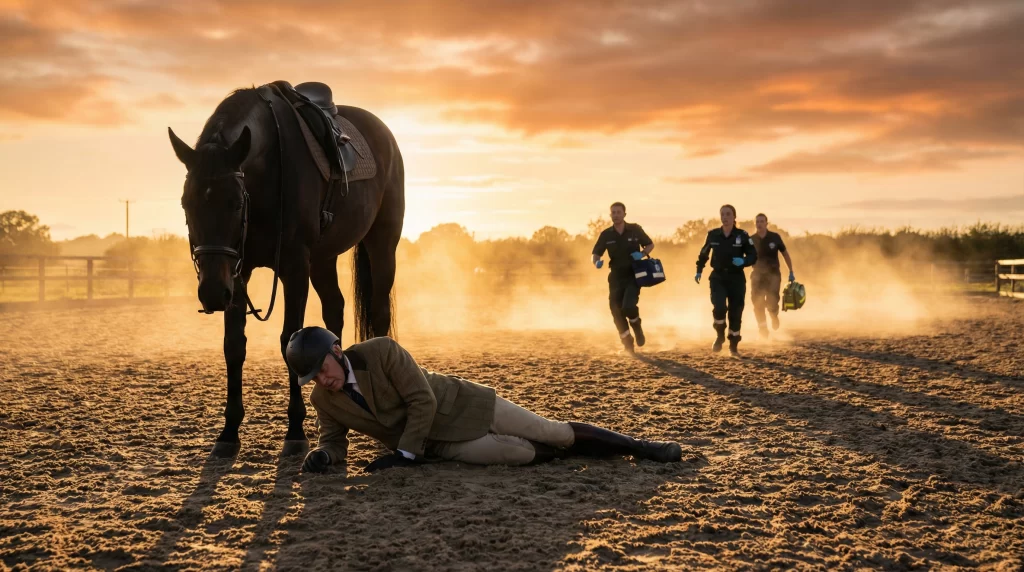
The entertainment industry was recently reminded of the dangers associated with horses when 94-year-old Star Trek legend William Shatner revealed he suffered a devastating injury. During an equine competition late last year, Shatner was thrown from his horse, resulting in a shattered right shoulder that required extensive reverse shoulder surgery (Page Six ). According to his account, the horse was moving too fast and veered unexpectedly, launching the experienced rider into the dirt.
This incident is not an isolated event in Hollywood. Over the years, numerous public figures have experienced severe trauma while riding. Perhaps the most well-known and tragic example is the 1995 accident involving actor Christopher Reeve, which left him paralyzed from the neck down (Christopher & Dana Reeve Foundation ). These high-profile cases highlight a crucial reality — no amount of fame, wealth, or experience can completely eliminate the unpredictable nature of a thousand-pound animal.
When such accidents occur, the immediate focus is rightfully on medical care and recovery. However, the aftermath often involves complex legal evaluations. Determining liability in these situations requires a deep dive into specific statutes that govern equine activities across the United States. If you are curious about how emotional trauma factors into these events, you can read more about whether celebrities can really sue for emotional distress.
Understanding the Equine Activity Liability Act
The cornerstone of legal defense in horseback riding accidents is the Equine Activity Liability Act (EALA ). Currently enacted in 47 states, these laws are specifically designed to protect horse owners, equine professionals, and event sponsors from crippling personal injury lawsuits (Catanese & Wells Law ). The fundamental principle behind the EALA is the concept of “inherent risk.”
Legislators recognize that interacting with horses involves dangers that cannot be entirely mitigated. Horses can be spooked by sudden noises, unfamiliar objects, or even changes in the weather. They may buck, rear, or bolt without warning. Because these behaviors are natural and unpredictable, the EALA generally dictates that participants assume these inherent risks when they choose to ride or interact with equines.
Consequently, if a rider is injured due to a horse’s natural reaction or behavior, it is incredibly difficult to hold the facility or the horse owner legally responsible. This legal shield is vital for the survival of the equine industry, as it prevents businesses from being held strictly liable for accidents that are genuinely out of their control. For more context on how the legal system handles celebrity injuries broadly, explore what happens legally when a celebrity gets injured.
Exceptions to the Rule — When Can You Sue?
While the EALA provides robust protection for equine professionals, it is not an absolute shield against all liability. There are specific, legally defined exceptions where an injured party — whether a celebrity or a private citizen — can pursue a personal injury claim. Understanding these exceptions is critical for anyone involved in a horseback riding accident.
One primary exception involves the provision of faulty equipment. If a facility provides a saddle, bridle, or other tack that they knew or should have known was defective, and that equipment failure causes an injury, the EALA protections may be voided (Fox & Farley Law ). Similarly, if an equine professional fails to properly assess a rider’s ability and matches them with a horse that is wildly inappropriate for their skill level, they could be held liable for resulting damages.

Another significant exception relates to premises liability. If an injury occurs due to a dangerous latent condition on the property — such as a hidden sinkhole in an arena or a broken fence — and the property owner failed to post warning signs or address the hazard, they can be held accountable (The Stanley Law Group ). Furthermore, any act of gross negligence or willful disregard for the rider’s safety will completely bypass the EALA protections.
The Role of Waivers and Release Forms
In addition to statutory protections, equine facilities heavily rely on liability waivers and release forms. Before mounting a horse at a commercial stable or participating in an event, riders are almost universally required to sign a document acknowledging the risks and agreeing not to sue in the event of an injury.
These contracts are legally binding documents that serve as a first line of defense against personal injury claims. However, the enforceability of these waivers varies significantly by jurisdiction. In some states, a well-drafted waiver can protect a business even from claims of ordinary negligence. In others, courts may view these waivers with intense scrutiny, particularly if the language is ambiguous or if the injured party is a minor.
It is important to note that a liability waiver cannot protect a business from claims of gross negligence or intentional harm. If a facility acts with reckless disregard for safety, a signed piece of paper will not absolve them of their legal responsibilities. This legal nuance is why thorough investigations are necessary following any severe equestrian accident. For additional reading on how legal claims are structured, Ramos Law outlines your rights after a horseback riding accident in detail.
Navigating the Aftermath of an Equestrian Injury
The physical and emotional toll of a horseback riding accident can be overwhelming. Injuries often range from broken bones and torn ligaments to severe traumatic brain injuries and spinal cord damage. The road to recovery is frequently long, painful, and incredibly expensive.
When a celebrity experiences such an event, the media scrutiny adds an additional layer of complexity. However, the legal principles remain the same regardless of the victim’s status. Establishing liability requires a meticulous examination of the circumstances surrounding the accident, the behavior of the horse, the condition of the equipment, and the actions of the professionals involved.
For those who have suffered injuries in an equestrian setting, consulting with a legal professional who specializes in equine law or personal injury is essential. These experts can navigate the intricacies of the EALA, evaluate the enforceability of signed waivers, and determine if there are viable grounds for a claim based on negligence or premises liability. According to Knezek Law, the injured party must demonstrate that the injury occurred due to negligence or recklessness — simply being injured while interacting with a horse is not sufficient grounds for a successful claim.
Safety First — Mitigating the Risks
While the legal landscape provides frameworks for addressing accidents after they happen, the primary goal should always be prevention. Both riders and equine professionals have a shared responsibility to prioritize safety in order to minimize the likelihood of severe injuries.
For riders, this means always wearing appropriate safety gear, including an ASTM/SEI certified helmet and proper footwear with a heel. Advanced protective equipment, such as inflatable safety vests, is becoming increasingly popular and can significantly reduce the severity of torso injuries during a fall. Additionally, riders must be honest about their skill levels and avoid pushing themselves or their horses beyond their capabilities.
Equine professionals must maintain rigorous safety standards. This includes regularly inspecting all tack and equipment, ensuring that riding arenas are free of hazards, and carefully matching horses to riders based on experience and temperament. By fostering a culture of safety, the inherent risks of horseback riding can be managed, allowing enthusiasts to enjoy this magnificent sport with greater peace of mind.
The intersection of celebrity culture and personal injury law provides a fascinating lens through which to examine our legal system. Celebrity horseback riding accidents remind us that the laws designed to protect businesses and assign responsibility apply universally. Whether you are a Hollywood icon or a weekend trail rider, understanding your legal rights and the inherent risks of equestrian activities is paramount. For more in-depth coverage of celebrity injuries and the legal aftermath, explore the full InjuredCelebs.com blog.