
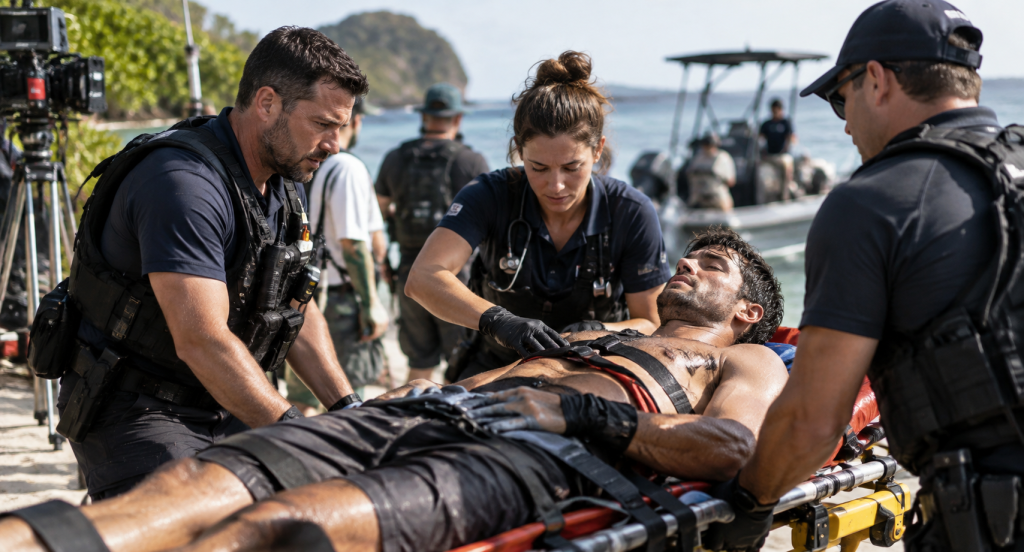
Reality television is built around unpredictable situations. Contestants are placed in unfamiliar environments, asked to complete physically demanding challenges, and often expected to perform under pressure while cameras continue recording. What viewers may see as entertainment, however, can involve genuine workplace and safety risks for the people participating.
A recent case involving Survivor Greece has brought those risks into sharp focus. Contestant Stavros Floros has filed a lawsuit seeking more than $100 million after a May 2026 boating accident during production left him with the loss of his left leg. According to reporting on the complaint, Floros alleges that contestants were required to spearfish in open water where tourist boats were present and that adequate protective measures were not provided. The allegations remain claims in pending litigation, rather than findings of a court.
What Happened to Stavros Floros?
According to People, Floros was participating in the Greek version of Survivor when he was struck by the propeller of a tourist boat while spearfishing near the Dominican Republic. The accident occurred on May 11, 2026.
Floros reportedly suffered catastrophic injuries and underwent multiple surgeries during a lengthy hospitalization in Miami. His lawsuit names several companies and individuals associated with the production and seeks more than $100 million in damages.
TMZ reported that Floros alleges the production required contestants to spearfish in open water without adequate safety boats, protected areas, or warning markers. Those allegations are disputed matters for the legal process to address.
The case is significant because it raises a broader question that extends beyond one reality show: when contestants are injured while performing activities connected to a television production, who is legally responsible?
Are Reality TV Contestants Employees?
One of the first legal questions in a reality TV injury case may involve the relationship between the contestant and the production company.
A contestant may sign extensive agreements before appearing on a program. Those agreements can address compensation, participation requirements, releases, arbitration, insurance, medical treatment, and risks associated with filming. But signing a contract does not necessarily provide a simple answer to every question involving injury or negligence.
The legal classification of a contestant can vary depending on the circumstances and applicable law. A court may examine the actual relationship between the parties rather than relying solely on the title used in a contract.
This distinction can affect whether workers’ compensation, traditional negligence principles, contractual claims, or other legal remedies are available.
When Can a Production Company Face Liability?
A production company may potentially face liability when an injury results from conduct or conditions that the law recognizes as negligent or otherwise actionable. The precise legal standard depends on the jurisdiction and circumstances.
In general terms, a negligence claim may involve questions about whether a party owed a duty, whether that duty was breached, whether the breach caused the injury, and what damages resulted.
For reality television, those questions can become complicated because producers often control the environment, schedule, challenges, equipment, transportation, and activities contestants perform.
For example, investigators could examine whether a dangerous activity was reasonably foreseeable, whether safety personnel were present, whether adequate warnings were provided, and whether production personnel knew about specific hazards.
Our article on on-set safety failures in 2026 examines similar questions involving production environments and the responsibility to address known hazards.
Why Reality TV Challenges Can Create Unique Risks
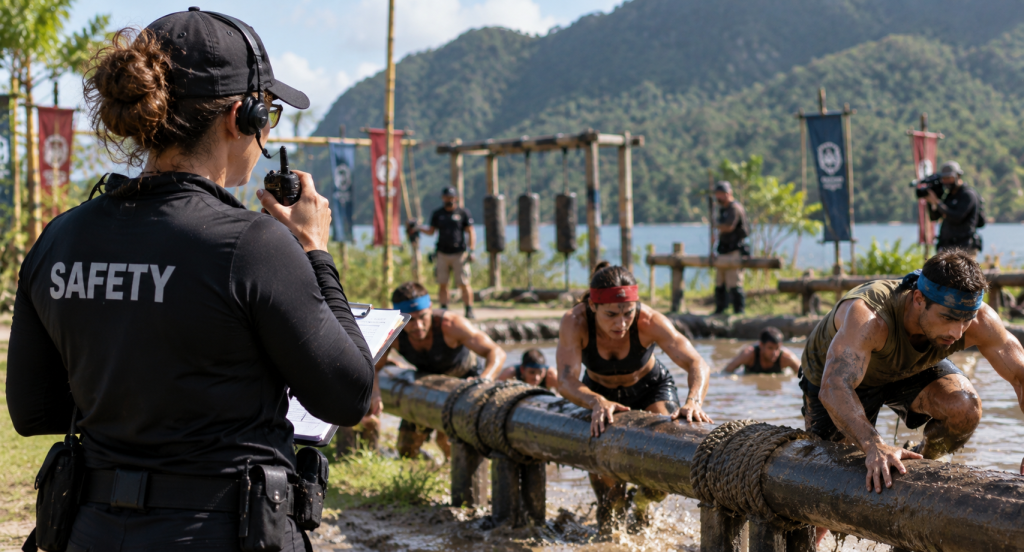
Reality television differs from traditional scripted productions because contestants are frequently expected to respond in real time. Challenges may involve water, heights, vehicles, animals, extreme weather, physical competition, or remote locations.
Even when a challenge appears carefully planned, conditions can change quickly. Weather can deteriorate, equipment can fail, contestants can become exhausted, and third parties may unexpectedly enter an area being used for filming.
Water-based productions can be particularly complex. Boats, swimmers, divers, currents, underwater equipment, and other vessels may operate in the same environment. Establishing communication and identifying who has responsibility for monitoring the area can therefore become critical.
Could Third Parties Also Be Responsible?
The production company may not be the only party examined after a serious reality TV accident.
Depending on the facts, other potentially relevant parties could include equipment manufacturers, contractors, transportation companies, property owners, boat operators, medical providers, or other businesses involved in production.
The Floros lawsuit illustrates how complicated these cases can become. Courthouse News Service reported that the complaint identifies several production-related defendants and includes claims involving negligence, civil conspiracy, and maritime law.
That does not mean every named defendant will ultimately be found liable. Litigation allows each party to present defenses, evidence, and arguments concerning responsibility.
What Role Does Maritime Law Play?
Accidents occurring on or near navigable waters can introduce another layer of legal complexity. Maritime law may apply in circumstances involving vessels, navigation, or certain injuries occurring on navigable waters.
However, simply being near the ocean does not automatically determine which maritime rules apply. Courts may examine the location of the incident, the activities involved, the status of the injured person, and the particular claims being asserted.
The distinction can be important because federal maritime law may operate differently from ordinary state personal injury law.
For example, the U.S. Supreme Court has explained that the Jones Act provides a negligence cause of action for certain seamen, but that the statute does not generally apply to people who do not meet the legal requirements for seaman status. The Cornell Legal Information Institute provides the Supreme Court’s discussion of these principles.
Safety Evidence Could Become Critical
When a reality TV contestant is seriously injured, evidence from the production may become extremely important.
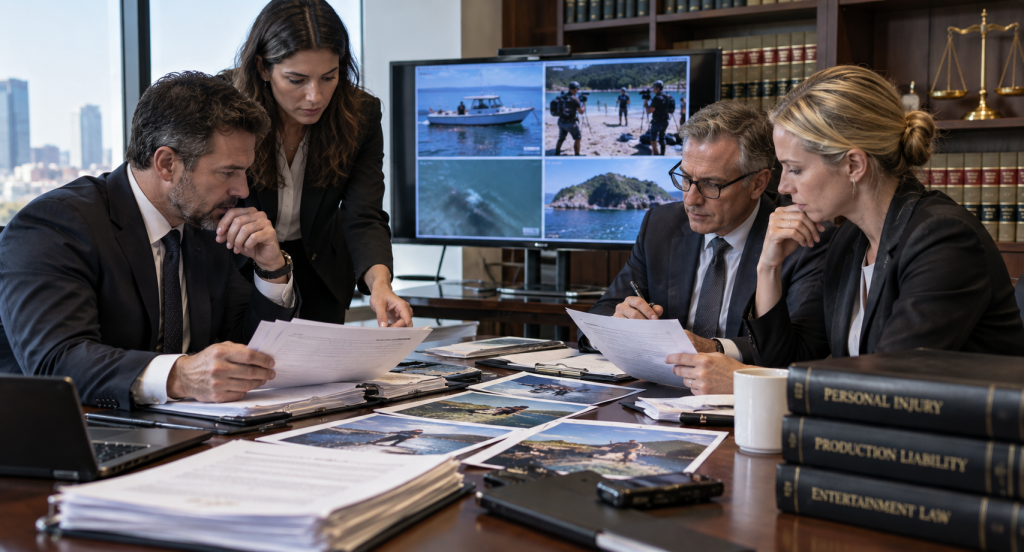
Investigators and attorneys may examine filming schedules, safety plans, challenge instructions, training records, medical reports, incident reports, communications, video footage, photographs, equipment records, and witness statements.
Video footage may be particularly valuable because reality programs frequently record activities from multiple cameras. Footage could potentially show the location of contestants, boats, safety personnel, barriers, warning systems, or other relevant conditions.
Production documents may also reveal whether safety concerns were identified before an activity took place.
OSHA’s rules regarding work-related injuries provide another useful reference point when analyzing employment-related production accidents. OSHA explains that an injury can generally be considered work-related when an event or exposure in the work environment caused or contributed to the resulting condition. Its definition of the work environment can include equipment and materials used during work. OSHA’s work-relatedness guidance provides more detail.
Reality TV Has a History of Production Safety Problems
The risks involved in reality and television production are not theoretical. OSHA records contain examples of serious injuries occurring during television production.
In one documented case, an employee working as a stunt performer fractured a leg while performing a television stunt. In another investigation, an employee suffered severe injuries after a television production set wall fell during work. These incidents demonstrate why production safety can become a serious regulatory and legal issue.
OSHA’s records also include investigations involving stunt work and other production-related hazards. These records do not establish that every entertainment accident involves negligence, but they demonstrate the range of risks that can occur in television production.
Our related article on celebrity stunt double injuries looks more closely at liability questions surrounding dangerous entertainment work.
What Damages Could an Injured Contestant Seek?
If a contestant establishes a valid legal claim, potential damages depend on the applicable law and facts of the case. Serious injuries can create extensive financial and personal consequences.
Depending on the claim, damages could potentially involve medical expenses, rehabilitation costs, lost income, diminished earning capacity, pain and suffering, disability-related losses, and other legally recognized damages.
For a young contestant who suffers a permanent disability, the long-term financial impact can be particularly significant. Medical treatment may continue for years, while the person’s ability to work or participate in activities may change permanently.
The amount sought in a lawsuit is not necessarily the amount ultimately recovered. A claim for a particular sum is an allegation or demand, while the final outcome may depend on settlement negotiations, court rulings, trial evidence, or other proceedings.
Can Contestants Waive Their Rights?
Reality TV contracts commonly contain provisions addressing risks and potential liability. Contestants may acknowledge that certain activities are dangerous before filming begins.
That does not necessarily resolve every legal question. The enforceability and scope of contractual provisions depend on the applicable law and the specific wording of the agreement.
Courts may also distinguish between accepting an ordinary risk associated with participation and claims involving alleged negligence, intentional misconduct, statutory violations, or conduct outside the scope of an agreement.
For this reason, an injury waiver should not automatically be treated as proof that an injured contestant has no legal options.
How Reality TV Productions Can Improve Safety
Producers can reduce risks by carefully evaluating activities before filming begins. Safety planning may include qualified personnel, medical support, equipment inspections, clear communication systems, controlled filming areas, emergency procedures, and contingency plans.
Water-based productions may require additional precautions because conditions can change quickly and outside vessels may create hazards. Productions should also consider what happens if a contestant becomes injured, separated from the group, or unable to continue.
These precautions are not merely about avoiding lawsuits. Effective safety planning can protect contestants, crew members, production schedules, and the reputation of the program.
What the Floros Lawsuit Could Mean for Reality Television
The Floros case could receive significant attention because it involves an extremely serious injury and allegations concerning the safety of an activity incorporated into a reality show’s production.
TheWrap reported that Floros filed the lawsuit after the accident and quoted him discussing the impact of losing his leg at a young age.
The case may ultimately provide additional information about production safety practices, contractual relationships, jurisdiction, and the responsibilities of companies operating reality television programs.
It is important, however, to separate allegations from established facts. The lawsuit is a legal claim, and the defendants are entitled to respond. The court—not headlines or social media posts—will determine the legal issues presented in the case.
Final Thoughts
Reality TV injuries can raise complicated questions because contestants may be exposed to unusual environments and physically demanding activities while production companies control many aspects of filming. When a serious accident occurs, determining responsibility may require careful examination of contracts, safety procedures, evidence, employment relationships, and applicable law.
The lawsuit filed by Stavros Floros following his devastating boating accident has brought those questions back into the spotlight. His allegations concerning safety measures during Survivor Greece will ultimately have to be evaluated through the legal process.
For viewers, the case is a reminder that reality television may be unscripted, but the risks faced by contestants are very real. As productions continue to push the boundaries of entertainment, protecting participants should remain an essential part of the process.
For more coverage of celebrity injuries, reality TV accidents, entertainment lawsuits, and legal issues behind major headlines, visit InjuredCelebs.com.