
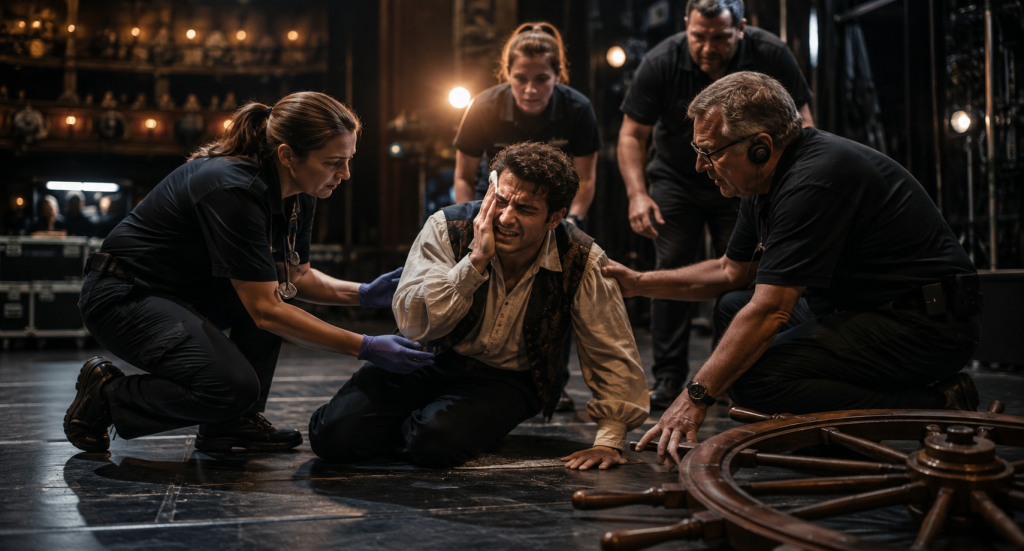
Live theater depends on carefully timed movement, elaborate scenery, and props that help create memorable performances. When something goes wrong, however, a routine stage moment can become a serious workplace injury. A recent incident involving Broadway performer Frankie Grande has renewed attention on the risks performers face from stage props and the legal questions that may follow.
Grande suffered a concussion and facial injuries during a July 2, 2026 performance of Titaníque after a prop ship wheel struck him in the face. Reports state that he finished the performance before seeking medical attention.
The incident does not establish that anyone acted negligently. It does, however, provide an opportunity to examine what happens when a celebrity performer suffers an injury during a live production.
Why Stage Props Can Create Serious Injury Risks
Stage props may look harmless to audiences because performances are rehearsed and choreographed. Behind the scenes, many props require careful handling, positioning, timing, and maintenance.
A prop may be thrown, lifted, swung, moved across the stage, attached to scenery, or operated by several performers. Even a lightweight object may cause significant harm if it strikes a person’s head, face, neck, or another vulnerable part of the body.
Live productions also operate under strict timing requirements. Performers may need to move quickly while lighting changes, music plays, scenery moves, and other cast members perform nearby.
These conditions mean that stage safety involves more than simply inspecting a prop. Production teams may also need to consider choreography, spacing, visibility, communication, and the interaction between performers and equipment.
What Happened to Frankie Grande?
Frankie Grande was performing in Titaníque on Broadway when a prop wheel struck him in the face during a performance. BroadwayWorld reported that Grande had thrown the prop wheel into the air before it hit his nose. Grande later shared photographs of his injuries and disclosed that he suffered a concussion.
Grande’s injury received attention because it demonstrates how quickly a theatrical prop can become a workplace hazard. The official Broadway listing for Titaníque identifies Grande among the show’s performers at the St. James Theatre.
Importantly, available reporting does not indicate that Grande accused the production of negligence. The incident appears to have been an accident rather than a publicly established safety violation.

When Does a Stage Prop Injury Become a Legal Issue?
An injury during a performance does not automatically mean someone is legally responsible. Investigators may need to determine what caused the accident and whether anyone failed to follow applicable safety requirements.
Questions may include whether the prop was properly maintained, whether the performance was appropriately rehearsed, whether the choreography created an unreasonable risk, and whether the performer received adequate instructions.
Other questions may involve whether the production followed its established safety procedures and whether an equipment manufacturer, contractor, employer, or another third party contributed to the incident.
These issues are similar to questions raised in other celebrity injury cases. Our article on celebrity stunt double injuries and liability examines how production companies, coordinators, equipment providers, and other parties may become relevant after an entertainment injury.
Workers’ Compensation May Apply to Performers
One of the most important legal considerations is whether the performer is covered by workers’ compensation. A stage injury that occurs during employment may fall within a state’s workers’ compensation system.
For example, New York’s Workers’ Compensation Board explains that workers’ compensation provides medical care and cash benefits for eligible employees who suffer work-related injuries. The system generally focuses on whether the injury is work-related rather than requiring the injured worker to prove employer negligence.
That distinction matters for performers. An actor may suffer an injury during a routine performance even when everyone followed the applicable safety procedures. Workers’ compensation may still provide a framework for addressing medical treatment and lost income when eligibility requirements are met.
The New York Workers’ Compensation Board also explains that medical reports may be required when an injury affects a worker’s ability to work or when a claim becomes disputed.
Could a Performer File a Negligence Claim?
A workers’ compensation claim and a negligence lawsuit are not necessarily the same thing. The available legal claims depend on the jurisdiction, employment relationship, contracts, and facts surrounding the injury.
In some circumstances, workers’ compensation laws restrict lawsuits against an employer. Separate claims against certain third parties may remain possible, depending on the circumstances and applicable law.
For example, an outside company that supplied defective equipment could potentially raise different legal questions from an employer. A contractor responsible for maintaining specialized stage machinery could also become relevant if equipment failure contributed to an injury.
Forbes’ legal analysis of Grande’s injury similarly noted the distinction between workers’ compensation and potential third-party claims. The article also emphasized that Grande’s injury had not been presented as an allegation of employer negligence.
Stage Safety Depends on More Than the Performer
Performers are only one part of a live production’s safety system. Directors, stage managers, technicians, prop teams, choreographers, production managers, and other personnel may all contribute to the safe execution of a scene.
Safety planning may involve testing props, establishing movement patterns, checking stage conditions, communicating changes, and reviewing potential hazards before a performance.
Professional entertainment organizations also recognize the importance of safety training. SAG-AFTRA’s 2026 theatrical and television agreement includes provisions addressing mandatory safety training for stunt performers.
Although stage acting and film stunt work are different environments, the broader principle is similar. High-risk entertainment work requires safety planning that accounts for the specific conditions of each production.
What Evidence May Matter After a Stage Injury?
When a performer suffers an injury, documentation may become important if questions later arise about what happened.
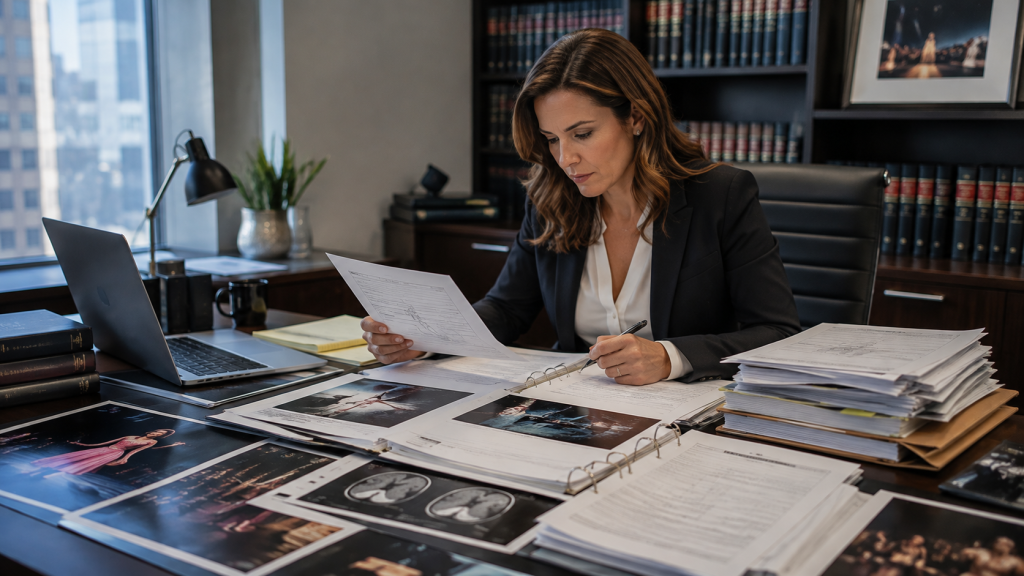
Potential evidence may include medical records, incident reports, rehearsal footage, performance recordings, photographs of the prop, maintenance records, safety checklists, production schedules, witness statements, and communications between production personnel.
Video can be particularly significant in live entertainment cases. A performance may be recorded by the production itself, while audience members may capture portions of the incident from different angles.
Medical documentation can also establish the nature of an injury and the treatment provided. For a performer, records may also document restrictions that affect rehearsals, performances, or other professional obligations.
Why Celebrity Injuries Receive So Much Attention
When a well-known performer gets hurt, the incident can become a major news story within hours. Fans may share photographs and videos across social media, while entertainment publications report on the performer’s condition.
This attention can create additional pressure for performers and productions. A celebrity may face questions about returning to work, while producers may need to determine whether a performance can continue without changes.
Our article on celebrity tour injuries in 2026 explores similar concerns involving performers who suffer injuries while working under demanding live entertainment schedules.
Our coverage of celebrity injuries during public appearances also examines how event conditions and the actions of other parties may affect liability questions.
How Productions May Reduce Prop Related Risks
Live productions cannot eliminate every possibility of an accident. They may, however, use safety practices designed to reduce foreseeable risks.
These practices may include inspecting props before performances, rehearsing potentially dangerous movements, establishing safe distances, reviewing choreography, communicating changes, and removing damaged equipment from use.
Prop design may also affect safety. A production may use modified materials or lighter alternatives when the appearance of a prop can be maintained without creating unnecessary weight or force.
Emergency planning is another important consideration. Medical personnel and production staff may need clear procedures for responding when a performer suffers a head injury or another serious condition.
What Happens After a Celebrity Performer Is Injured?
The immediate priority after an injury is medical evaluation. The legal consequences may become clearer after the performer receives appropriate treatment and the production has documented what occurred.
A production may temporarily change choreography, replace a prop, pause a performance, or modify the scene. Insurance carriers may also become involved when an injury creates medical expenses, production delays, or other covered losses.
If the injury affects a performer’s ability to work, workers’ compensation rules may become relevant. In New York, the Workers’ Compensation Board provides resources covering medical care, lost wages, claim procedures, and dispute resolution.
The Bigger Legal Picture
Frankie Grande’s injury illustrates why entertainment injury cases deserve more than a brief headline. A stage accident may involve medical treatment, employment law, workers’ compensation, equipment safety, contracts, insurance, and potential third-party liability.
The available facts surrounding Grande’s injury do not establish wrongdoing by the production. Still, the incident highlights the importance of understanding the legal framework surrounding workplace injuries in live entertainment.
As Broadway productions and other live performances continue incorporating elaborate props, choreography, and technical effects, performer safety remains an important issue for the entertainment industry.
Final Thoughts
Celebrity stage prop injuries can happen even during rehearsed performances. Frankie Grande’s concussion after a prop struck him during Titaníque demonstrates how an ordinary theatrical moment can quickly become a serious workplace incident.
Whether an injured performer has a workers’ compensation claim, a third-party claim, or another legal option depends on the facts and applicable law. Medical records, production documentation, safety procedures, and evidence from the scene may all help explain what happened.
For more coverage of celebrity injuries, entertainment lawsuits, and legal issues behind major headlines, visit InjuredCelebs.com.