
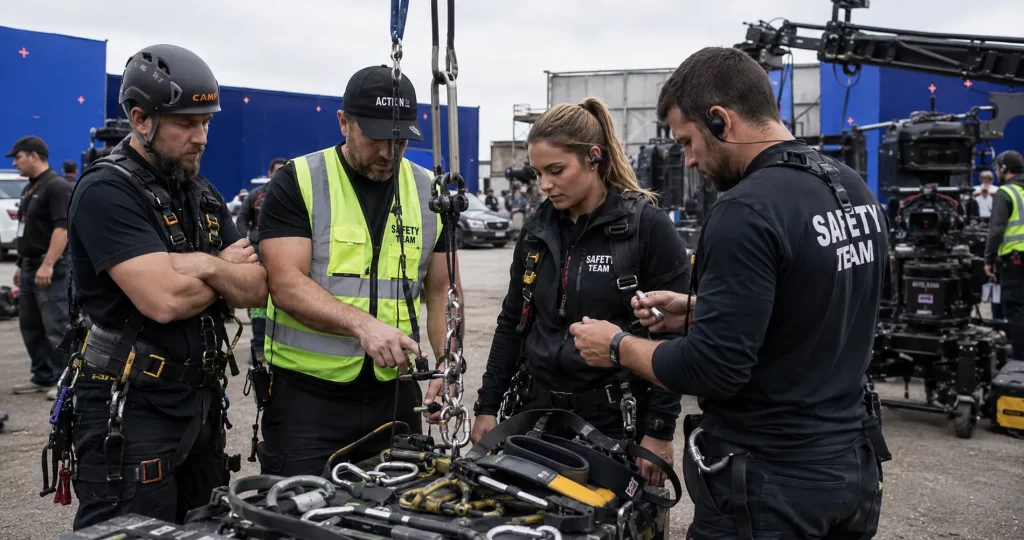
What happens when the stunt that is supposed to make an action series exciting sends an actor to surgery? That question has returned to the spotlight following reports that Oliver Stark suffered a broken ankle while filming Season 10 of the ABC emergency drama 9-1-1. He was not the only person injured: three other performers were reportedly hurt in separate stunt-related incidents during production.
The news is a timely example of how on-set injuries can involve more than medical treatment. Rehearsal warnings, incident documentation, stunt coordination, insurance and workplace protections all matter when dangerous scenes are filmed. The reports do not, by themselves, establish negligence or wrongdoing by the production. They do raise useful questions about how risks are identified and managed.
What Happened to Oliver Stark on the 9-1-1 Set?
On October 9, 2026, Deadline reported that Stark, who plays firefighter Evan “Buck” Buckley, broke his ankle in late August while performing a stunt. The injury required surgery, although he subsequently returned to work. The reported sequence involved a firefighter moving from a car, over a set piece, toward a ladder truck.
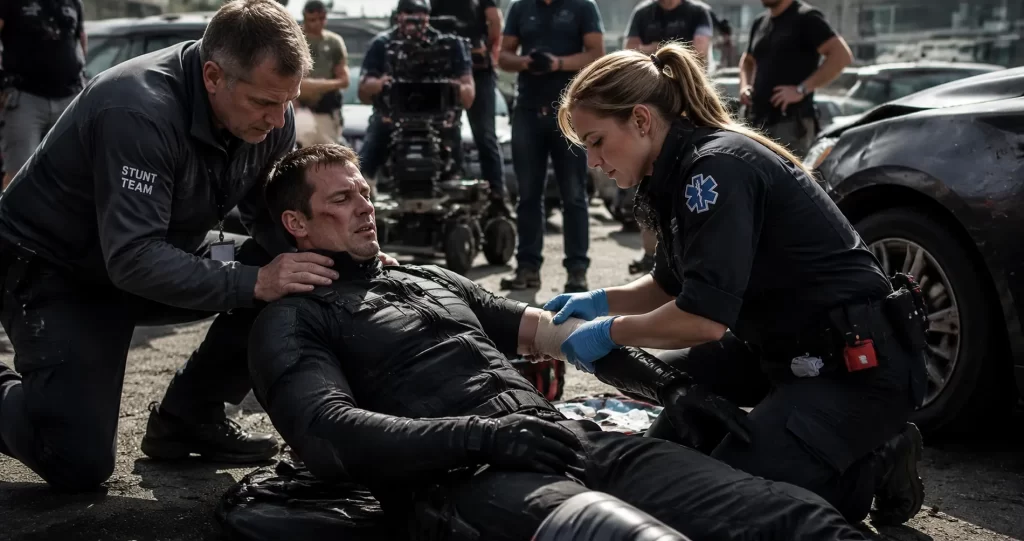
According to sources quoted in subsequent People coverage, a stunt double had sprained an ankle while rehearsing the same maneuver. The double reportedly declined medical treatment, and an injury report was not submitted. The stunt’s mechanics were adjusted afterward, but Stark was still injured while performing it.
These details are based on media reporting, not a published safety investigation or court finding. It would be inaccurate to conclude from them alone that an identifiable person or company violated a legal duty.
Why the Earlier Rehearsal Injury Matters
A stunt rehearsal is not merely practice for the camera. It is an opportunity to learn whether a movement, landing area, prop or interaction between performers creates a hazard that was not obvious during planning. A minor incident can provide information about the same risk that might cause a more serious injury later.
In the Stark reports, the double’s ankle injury makes documentation an especially important issue. A medical decision by an injured performer and an employer’s incident-reporting responsibilities are not necessarily the same thing. The exact reporting obligations depend on the employment agreement, applicable rules and the circumstances.
SAG-AFTRA’s production resources include an accident-report form for covered performers. An accurate report may help establish when something happened, which activity was involved, what was changed afterward and whether additional precautions were considered.
Three Other Reported Stunt Injuries
Stark’s fractured ankle was part of a wider story. Deadline’s October report described a stunt worker who needed stitches after an arm came into contact with jagged metal on a set piece. Another performer was reportedly hospitalized after landing awkwardly on a platform designed to simulate collapsing ground and was diagnosed with a broken rib and a minor compressed lung.
The incidents were not reported as one connected sequence. Different types of hazards were involved, and there is no basis for assuming that they shared a cause. Nevertheless, the reports illustrate why production safety covers everything from set construction and landing surfaces to communication, rehearsal and medical response.
What Are the Responsibilities of a Stunt Coordinator?
Professional stunt sequences are normally planned with people who have the relevant experience and training. The SAG-AFTRA stunt coordinator standards call for coordinators to take appropriate safety actions, work proactively with other departments and help ensure relevant performers attend safety meetings.
Those departments may include special effects, props, camera, locations and assistant directors. A firefighter sequence involving vehicles and a ladder truck, for example, could require multiple teams to agree on timing, performer positioning, clearances, rigging, protective equipment and emergency procedures.
This does not mean that a coordinator guarantees an injury-free outcome. It means planning and communication are essential parts of the job. For more background, see our previous article on stunt double injuries and potential liability.
Why Safety Meetings and Equipment Checks Matter
The industry has specific written recommendations for stunt work. Contract Services’ Safety Bulletin 4, revised in March 2025, addresses stunt planning, qualified personnel, rehearsal time, safety meetings, rigging and personal protective equipment.
The bulletin recommends discussing hazards and emergency plans with the people involved, testing relevant equipment and making clear who can stop a stunt if conditions become unsafe. These bulletins are industry guidance rather than binding law; applicable workplace regulations and contractual requirements still govern.
In practical terms, a changed stunt should be treated as a fresh opportunity to check the plan. If the distance, landing, equipment or number of people in the scene changes, the risk assessment may need to change too.
What Should Happen After an On-Set Injury?
The first concern is appropriate medical attention. After the immediate danger has passed, a production may need to secure the area, identify witnesses, document the equipment and conditions, and decide whether work can safely resume. The extent of investigation and reporting required depends on the injury and governing rules.
Recordkeeping is important even if an injury initially seems manageable. The Occupational Safety and Health Administration explains that employers under its jurisdiction must report a work-related fatality within eight hours and certain inpatient hospitalizations, amputations or losses of an eye within 24 hours. Those rules concern specified serious events; not every visit to a hospital is reportable under the same standard.
Documentation may include call sheets, rehearsal notes, equipment inspections, witness accounts, photographs, incident reports and medical restrictions. Preserving those records can help establish what happened without relying on rumor or memories months later.
Could an Injured Actor or Stunt Worker Seek Compensation?
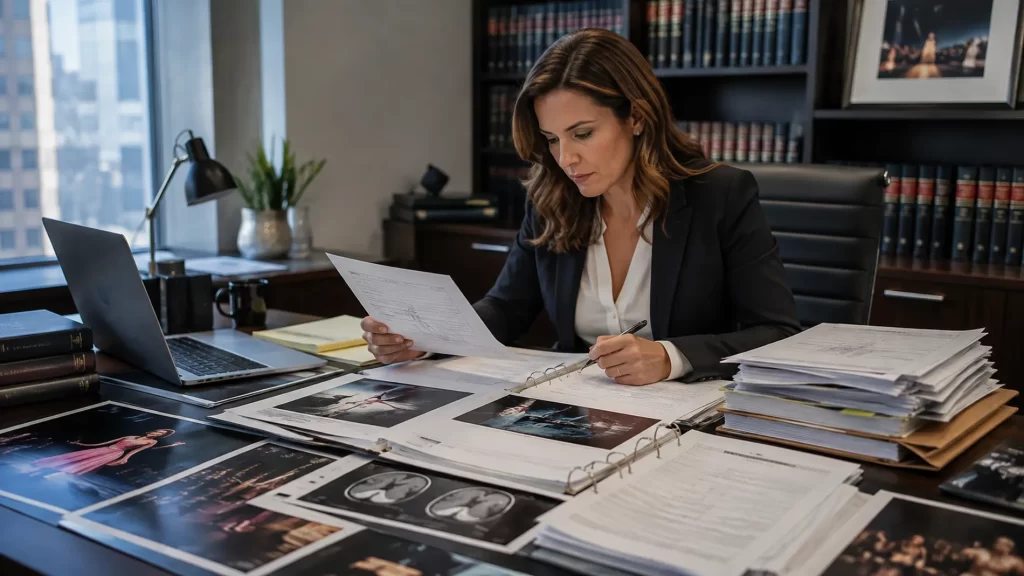
Possibly, but the available avenues depend on the applicable jurisdiction, employment relationship, insurance and facts. Workers’ compensation may provide treatment and some wage-replacement benefits for qualifying job injuries, regardless of whether another person was legally at fault.
For example, the California Division of Workers’ Compensation explains the importance of promptly notifying an employer and seeking treatment after a work injury. California’s system generally does not pay ordinary pain-and-suffering damages. Rules can differ elsewhere, and this is general background rather than a determination about Stark’s own benefits.
A separate negligence or product-liability claim may be possible in some circumstances, particularly where a legally responsible third party is involved. But workers’ compensation exclusivity, contractual terms and other defenses can limit civil claims. An accident does not automatically prove negligence, and there has been no verified lawsuit over Stark’s reported ankle injury in the sources reviewed for this article.
Our related coverage of what happens legally after a celebrity injury explains these distinctions in greater detail.
What the Reports Do Not Establish
Several questions remain unanswered publicly: who approved the final version of the stunt, how each reported hazard was assessed, what records were prepared, and whether any official findings will be issued. It would also be premature to infer that the separate incidents resulted from one systemic failure.
Reporting about a cluster of accidents is a reason to ask informed questions, not a substitute for evidence. In its account of the incidents, Deadline said a spokesperson for 20th Television declined to comment. That response does not establish fault or confirm a violation.
How Can Productions Respond to Warning Signs?
Strong safety practices include documenting unexpected incidents, reassessing a sequence after a problem in rehearsal, involving qualified personnel, allowing time for changes, confirming that performers understand the plan and ensuring that anyone with a safety concern can speak up. No single measure eliminates the risks of physically demanding work.
These issues also connect with our article about on-set safety failures and production pressures. The particular lesson of the 9-1-1 reporting is the value of treating an earlier incident as information worth investigating rather than as an inevitable part of action filmmaking.
Final Thoughts
Oliver Stark’s reported ankle fracture and the other 9-1-1 stunt injuries have renewed attention on the people who carry out dangerous scenes for television. These incidents underline the importance of rehearsals, accurate reporting, qualified coordination and medical care, even when no legal violation has been established.
The clearest takeaway is not that stunt work can be made risk-free. It is that credible warning signs deserve careful attention before the cameras roll again. For more reporting and analysis of celebrity injuries and entertainment law, explore InjuredCelebs.com.